9-11 Church St
9-11 Church St, Fredonia, NY 14063
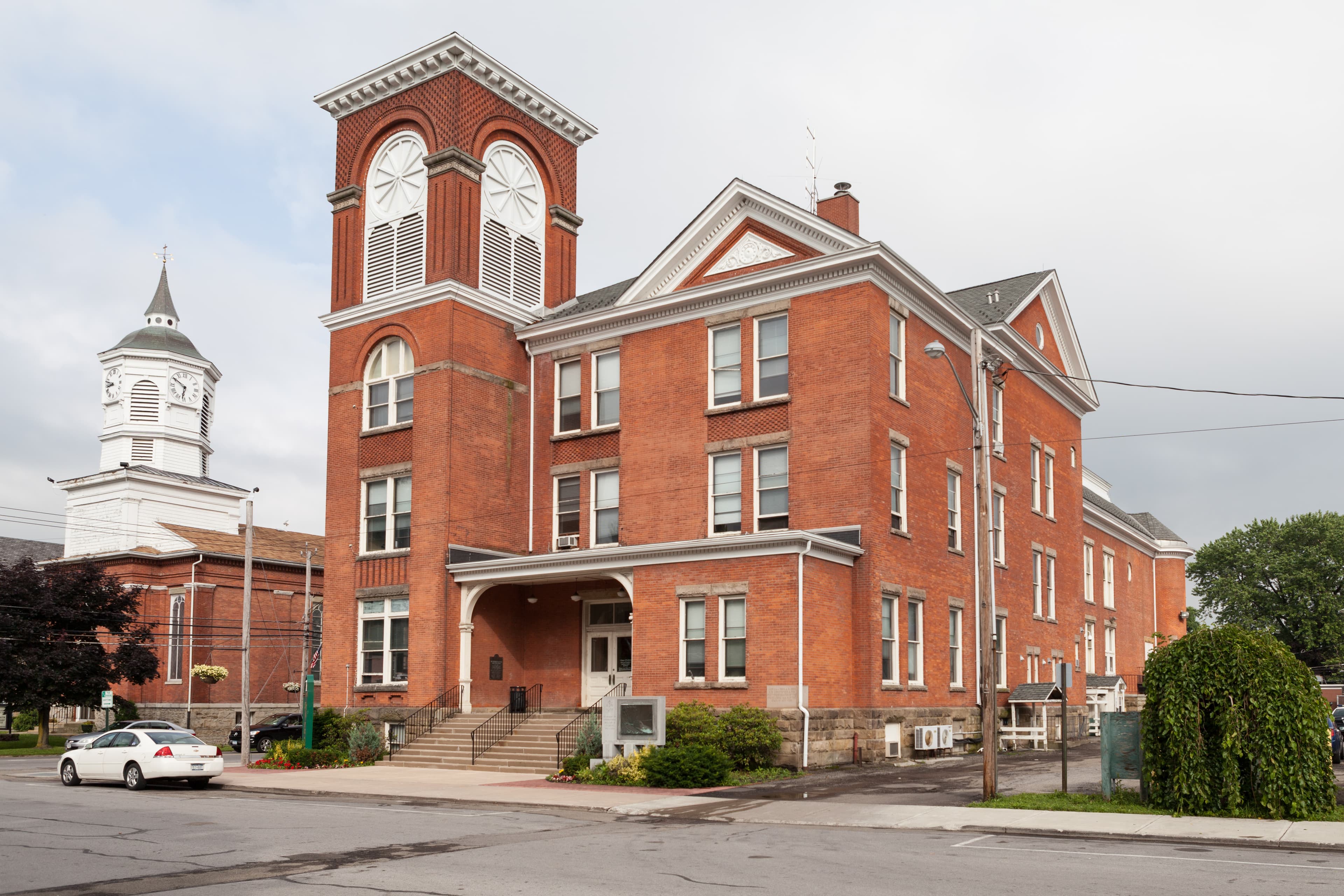
The Fredonia Opera House, housed within the Village Hall at 9-11 Church Street, stands as the cultural heart of Chautauqua County's oldest village and one of the best-preserved Victorian-era performing arts venues in western New York. Built in 1891, the structure combines civic government functions on the lower floors with a full-scale opera house and theater on the upper level — a common arrangement in prosperous nineteenth-century American towns where civic pride and cultural aspiration went hand in hand.
The building's architectural character reflects the Richardsonian Romanesque influence that swept American civic architecture in the 1880s and 1890s following the enormous success of Henry Hobson Richardson's work in Boston and elsewhere. The facade presents a bold composition of rough-cut limestone, round-arched openings, and massive corner tower elements that convey civic authority and permanence. The tower, rising above the Church Street corner, has long been a landmark of downtown Fredonia.
Fredonia holds a notable place in American entertainment history as the site of the world's first performance by the Marx Brothers, who played the Fredonia Opera House in 1905. The town's name later inspired the fictional country of "Freedonia" in the 1933 Marx Brothers film "Duck Soup." The opera house has hosted a continuous tradition of live performance since its opening, including visiting theatrical companies, vaudeville acts, lectures, and concerts.
Today the Fredonia Opera House operates as a year-round performing arts center, presenting live theater, independent cinema, and community events. The historic auditorium, with its original balcony and Victorian decorative details, has been carefully maintained and continues to bring audiences together in one of Chautauqua County's finest historic spaces.
- ◆Richardsonian Romanesque rough-cut limestone with round-arched openings
- ◆Prominent corner tower marking the Church Street civic presence
- ◆Combined village hall and opera house — civic and cultural functions integrated
- ◆Victorian auditorium with original balcony and period decorative details
- ◆Massive masonry construction conveying civic permanence and authority
- ◆Arched entry vestibule with decorative stonework
- ◆Historic performance tradition since 1891, including early Marx Brothers appearances
No work history documented yet.
Contractors, tradespeople, or owners who have worked on this property can submit records to the archive.
Submit Work History →